The Architecture of the Inner City: How We Build Our Inner Space
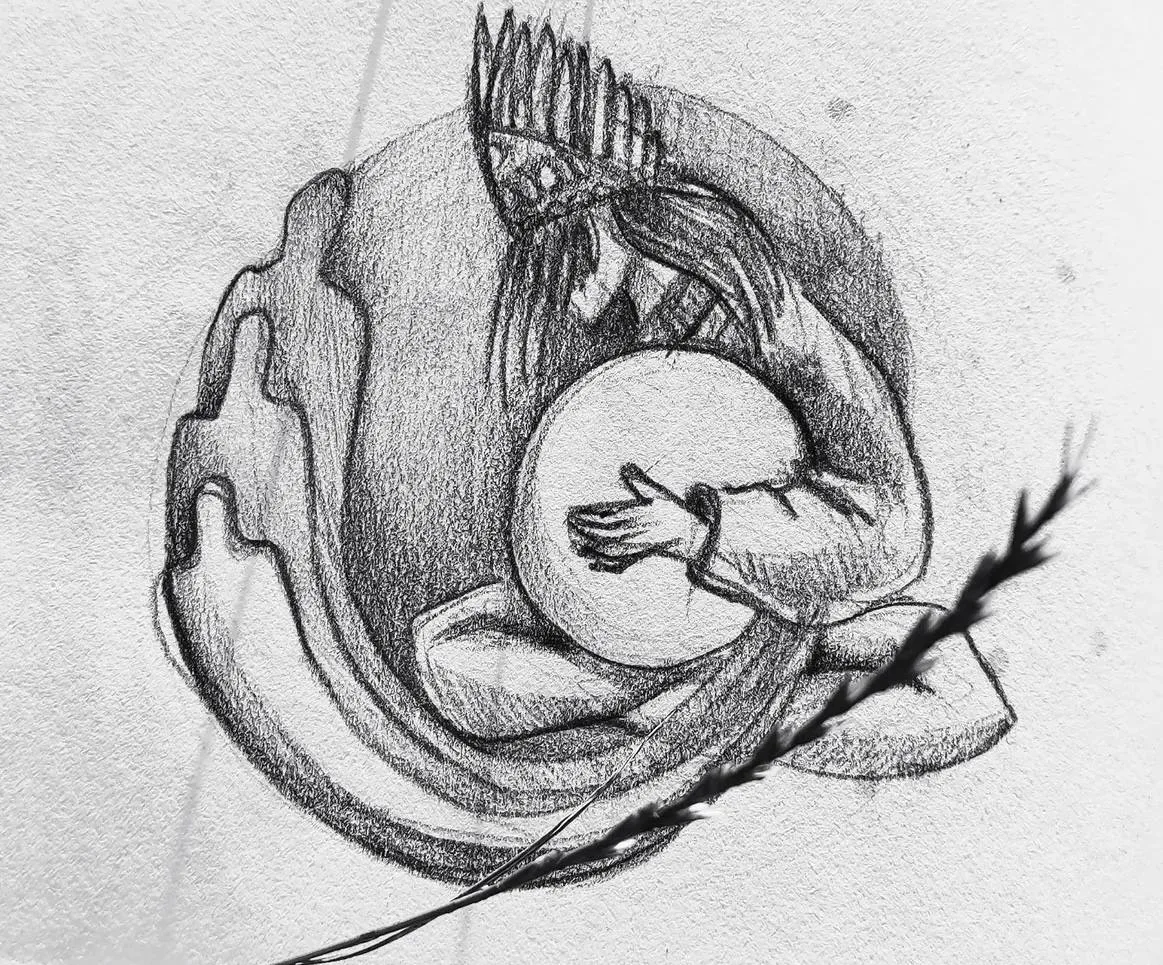
Vitalina SorokaOka
The Architecture of the Inner City: How We Build Our Inner Space
Alongside the external space that surrounds us, every person also has an inner, sacred space where thoughts, beliefs, ideas, and plans reside – a worldview governed by the unique laws of an individual personality.
At the intersection of challenging times, our mental space is constantly undergoing transformation, just like the world around us. War, the overwhelming pace of technological progress, uncertainty, and a multitude of personal concerns place us on a construction site. We find ourselves at the epicenter of continuous loss and rebuilding. This profoundly drains our resources.
How can we support ourselves? Every evening, we take off our social facades and are left face to face with the ruins of exhaustion and the impossibility of keeping up with the whirlwind of events.
The answer can be found through the metaphor of a city. When our inner foundations begin to shake, we can turn to the materials themselves for support – learning resilience from stone and flexibility from wood.
Try to look at architectural structures not simply as buildings, but as frozen emotions, feelings, and states. This is where our perception begins to expand. The next time you walk through your city, try to “unsee” the concrete boxes and look at them through the lens of empathy.
Contemplating architecture changes our perspective. Like any form of art that draws its material from raw, painful life but adds something that pain alone does not contain – meaning and form. The same applies to our inner city. When there is too much chaos, we need to give it shape. So how do we begin our own reconstruction?
We can start with the simplest foundation – basic geometry, which directly influences our psycho-emotional state. Simple geometric shapes, recognized by the subconscious on an archetypal level, can become the very “bricks” of restoration:
• Want to feel safe – draw circles; they are like walls around your city, restoring boundaries and offering protection.
• Seeking stability, calm, and grounding – draw squares; these are the foundations of buildings and your support.
• Need a breakthrough and activation of stagnant energy – turn to triangles; they are spires that pierce through stagnation.
• When thoughts become overwhelming, we transfer them onto paper as irregular lines resembling cracks in walls – simply observing and recording them before beginning repairs.
This becomes a kind of “inventory” and clearing of space for new construction.
Sometimes anxiety, grief, or pain become so overwhelming that they literally “tear” us apart from within, threatening to destroy our inner architecture. In such moments, we need a reliable container. So we transfer this state onto paper. Lines and shapes have clear boundaries. The page has edges. As we draw, we tell our psyche: “Here is a place that can hold my feelings. I am no longer drowning in them; they are safely contained here on the paper.”
Having found this sense of safety on the page, we can take the next step – it becomes essential to find within ourselves a special place: an imagined quiet room or a courtyard with a garden. This is a space where the sounds of sirens and deadline alarms cannot reach, where absolute silence is always preserved. Meditation becomes the key that unlocks the door to this untouched space.
Yet as we turn inward, we must not forget the body – it is our first and most fundamental home. When we feel completely exhausted by constant rebuilding, it is important to first check the state of this foundation. That is why it is so important to combine art-therapeutic drawing and meditation with bodily awareness: feel your feet firmly on the ground, notice how your breath fills every “room” of your body with oxygen. Feel the touch of clothing on your skin. Give yourself permission to relax, and allow your body to carry weight.
Grounded in bodily presence, I invite you to engage your imagination. Ask yourself: what material is your inner city mostly made of right now? And what material is it critically lacking? Concrete represents endurance and solidity – it can withstand impact. But sometimes we need metal and wood so we don’t break under the winds of change. We also need the transparency of glass, so that after darkness we can begin to let light pass through again.